
SASCOTEC SPECIAL!
“BIPLANAR HIGH-FREQUENCY FLUORESCENCE CINEMATOGRAPHY” (FLUOKIN) AT THE VETERINARY MEDICINE FACULTY OF THE UNIVERSITY OF LEIPZIG
“Biplanar what-excuse me?” the interested reader may ask when reading the above title. This is how the discussions began between Sascotec founder and managing director Oliver Sandmann and the institute’s director, Professor Mülling, and his colleagues following a successful public tender.
In short, it is a three-dimensional X-ray procedure that uses up to 500 images per second to precisely map the position of bones, joints, and soft tissues—and does so in motion!
Until now, such measurements could only be taken using reference points attached to the outside of the animals’ skin or fur. When the animals move—especially when they move quickly—skin displacement causes significant deviations from the measurement point, for example, to a targeted joint protrusion. This distorts the results and, in some cases, significantly reduces their significance. The deviations measured using the FluoKin method, on the other hand, are less than one millimeter and less than one degree! A quantum leap in accuracy!
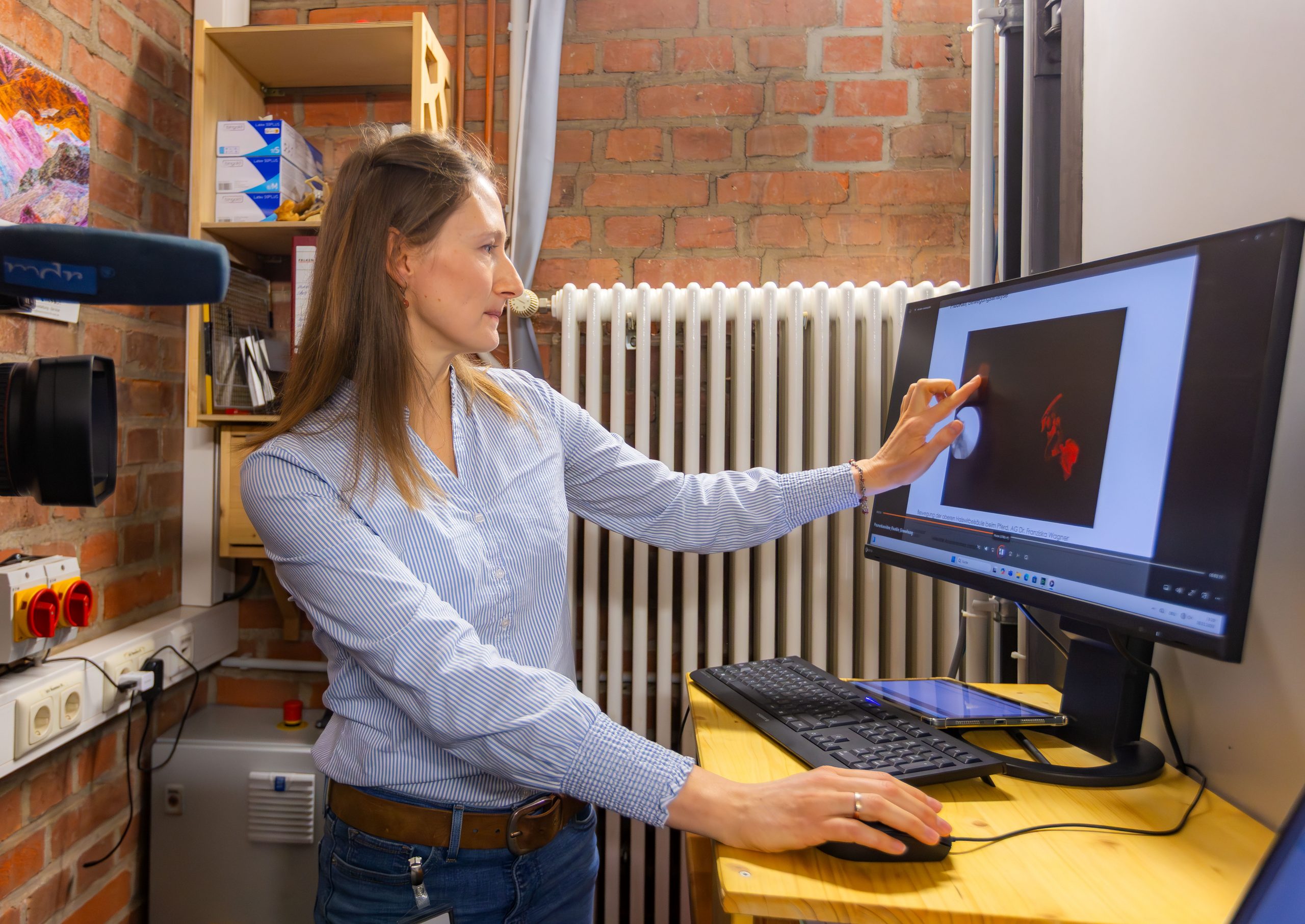
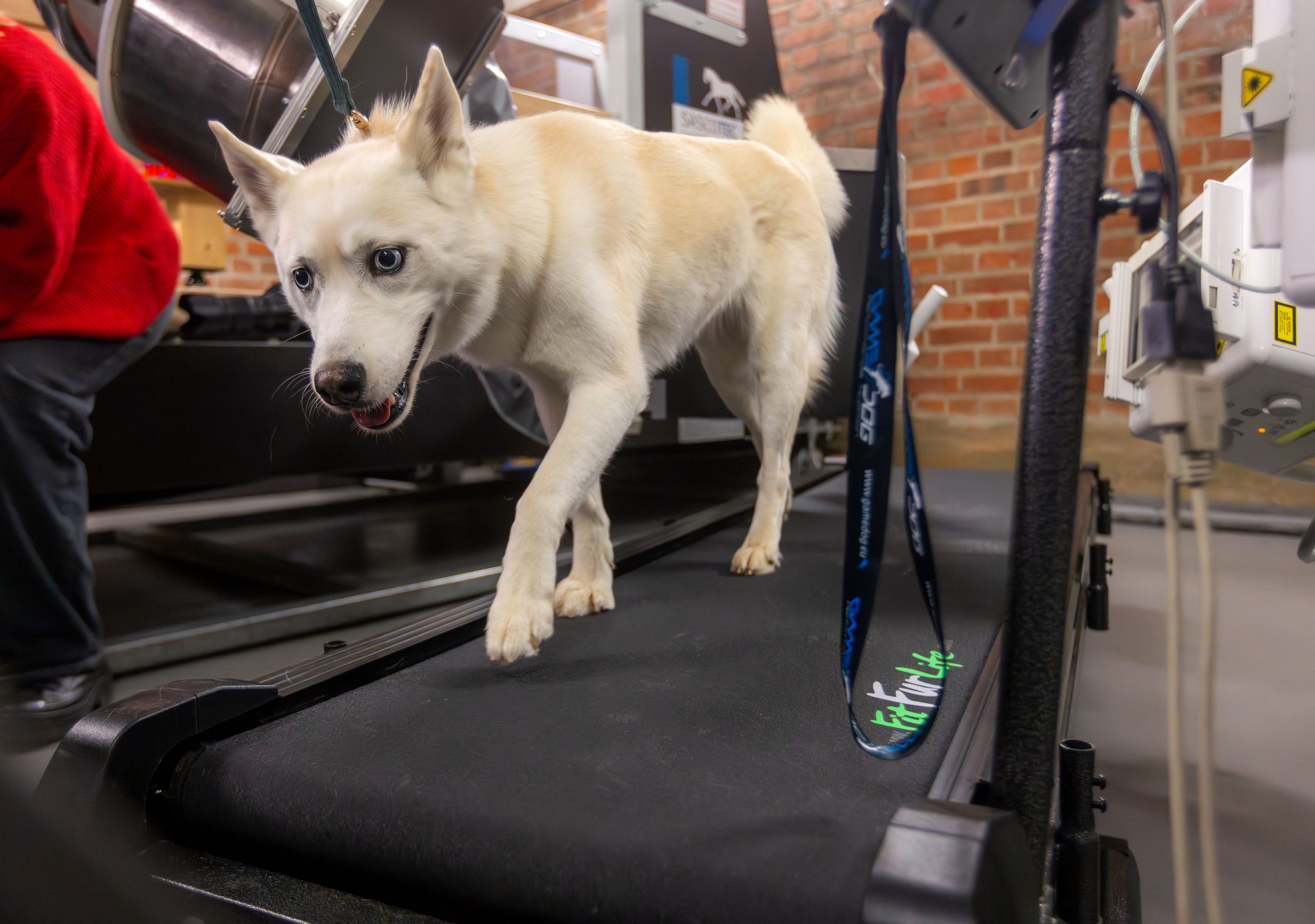
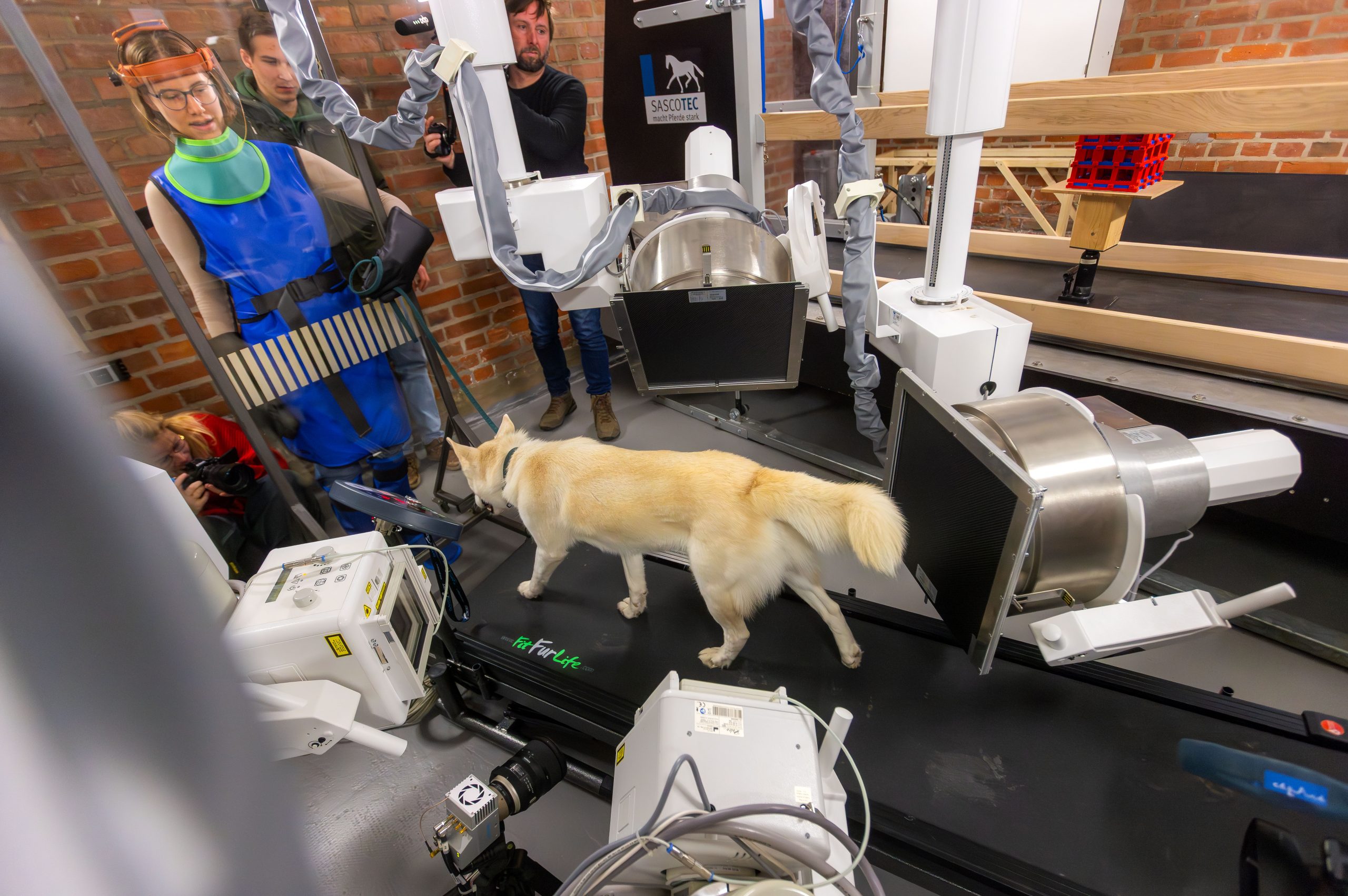
The technology can be used not only for small animals such as dogs or cats, but also for large animals such as horses and cattle – although not for elephants, due to space and capacity constraints. Because the radiation exposure is harmless, humans can also be examined. Not only medical research, hospitals, and rehabilitation institutes could benefit from the measurement results, but in a further step, sports associations and clubs could also be conceivable. But we are not there yet. The facility, equipped with Japanese X-ray technology, only recently went from test to regular operation and is the only one of its kind in Germany and one of the few worldwide.
Before the X-ray measurement, however, the gods had set a requirement that caused quite a headache due to the spatial conditions and content specifications: the construction and procurement of a treadmill suitable for this purpose! After all, the test subjects cannot walk around freely in the room, which is already too cramped and crammed with exclusive technology. Buying an off-the-shelf treadmill? No chance. Too many special requirements. Depending on the recording situation and test subject, the two ramps and all railings, side walls, and screens must be quickly removable. In other words, light enough for assembly and disassembly, yet sufficiently safe and stable.
It also had to be suitable for X-rays, i.e., lead-coated so as not to interfere with imaging. Controllable from various sides, it will in future be equipped with modern force measurement plates and more. Around 20 basic design requirements had to be met in order to fulfill the institute’s specifications. In short: an experienced treadmill supplier with specialist knowledge, great flexibility, and reliability was needed.
The institute found this supplier in the person of Oliver Sandmann, a manufacturer of high-quality horse training and rehabilitation equipment based in the beautiful Emsland region. Following the acquisition of the internationally renowned Mustang high-speed treadmill from Switzerland, which is used in numerous veterinary clinics worldwide, his company Sascotec already has some medical expertise. In addition, Sascotec is currently testing a new AI-supported health analysis system for horses, which is to be integrated into its in-house treadmills in the near future.
And since you don’t get any dumber when you take on new challenges, Oliver Sandmann redesigned the Leipzig treadmill from scratch after receiving the order: closely oriented to the manageable spatial conditions, fulfilling all medical requirements, taking into account the practical aspects of easy assembly and disassembly, safe handling for both the operating personnel and the animals being examined, and maintaining the excellent material quality that has made Sascotec products famous worldwide. Operation successful! The treadmill works, and so does the X-ray technology!
Now exciting examinations are on the agenda, which will enable completely new insights and precise statements about the position and (possibly incorrect) strain on the skeleton, joint surfaces, tendons, and muscles in motion. The data collected from the high-speed images allows for precise analyses of actual conditions. They also map individual clinical pictures, from which more effective therapies can be derived than was previously the case.
“We have learned a lot and are extremely proud to have managed to reconcile all the initially contradictory requirements. We are delighted to have contributed to the realization of the FluoKin process and wish the Leipzig Institute every success in its research in the service of animal health!” concludes Oliver Sandmann in our telephone conversation.
Readers who would like to delve deeper into the subject are referred to the following web address:
https://www.vetmed.uni-leipzig.de/veterinaer-anatomisches-institut/forschung/labore/hochfrequenz-fluoreszenz-kinematographie